


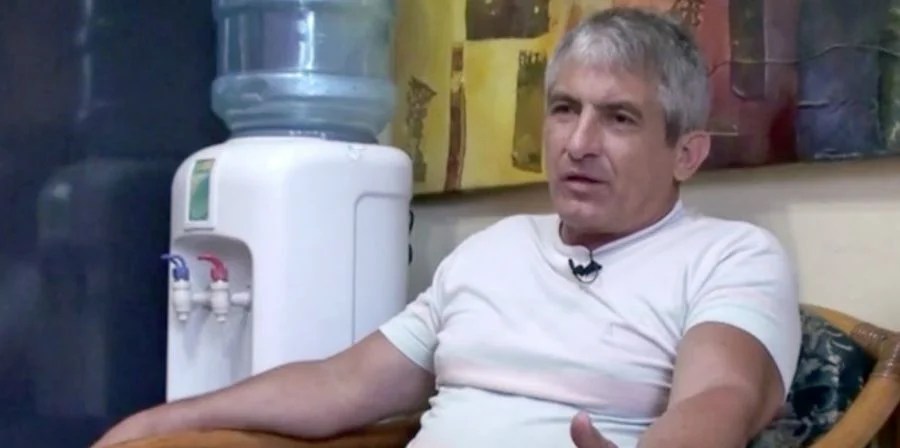
MIAMI, United States – Juan Pablo Roque, former Cuban Air Force pilot and member of the Wasp Network, known for infiltrating Cuban exile organizations in Miami—particularly Brothers to the Rescue—died in Havana on Tuesday, November 25, at the age of 70.
According to his ex-wife, Ana Margarita Martínez, his death followed open-heart surgery and the contraction of “a virus.” As of now, Cuban authorities have not provided an official explanation regarding the cause of death.
Luis Domínguez, a member of theFoundation for Human Rights in Cubaand head of theCuban Repressors Database, confirmed Roque’s death through three individuals with past ties to him, as he told Diario de Cuba. Domínguez also stated that Roque died “from a virus,” though no official or medical sources on the island have clarified the nature of the infection.
Further details on Roque’s health were shared by Cuban-American publicist Ana Margarita Martínez, his ex-wife, in an interview with Miami-based Cuban journalist Mario Vallejo:
“He had undergone open-heart surgery and was in delicate condition. Then he caught a virus—one of the ones going around Cuba right now—and he died,” Martínez explained.
The relationship between Roque and Martínez became one of the most well-documented cases of identity fraud related to Cuban espionage in the United States. The marriage was based on a false operational identity and was exposed when Roque abruptly returned to Havana in 1996—without warning his wife.
The case was examined in U.S. courts and by the international press due to the personal and legal impact of the deception. In a 1999 interview with The Guardian, Martínez described the emotional toll:
“Can you imagine waking up one day and finding out the last four years of your life have been a lie? That you were married to a spy? (…) I felt so betrayed, used, violated. I saw that our relationship had been a sham. I was humiliated in my community. I was so angry.”
Born on October 11, 1955, Roque was trained as a military pilot in Cuba. In 1992, he turned up at the U.S. Naval Base at Guantánamo, claiming to haveswum away from the island. That supposed defection opened the doors of the Cuban exile community in the U.S., where he quickly earned the trust of key figures and organizationsin Miami.
Under the guise of a defector, Roque infiltrated the humanitarian group Brothers to the Rescue, which conducted flights over the Florida Straits to locate rafters in distress. As a pilot, he participated in rescue missions while secretly feeding intelligence to Havana. His work as a spy ended abruptly when he fled back to Cuba, just one day before two Brothers to the Rescue planes were shot down by Cuban fighter jets in international waters in February 1996.
It was later revealed that Roque was part of the Wasp Network, a Cuban spy ring operating in South Florida in the 1990s. The network’s goals included infiltrating exile organizations, monitoring anti-Castro groups, penetrating U.S. military facilities, and supporting Cuban government operations inside the United States.
The Wasp Network was composed of at least 14 agents, five of whom were arrested and convicted in 1998, in what became known as the “Cuban Five” case—a term used by the Cuban government’s propaganda machine to portray the spies as heroes.
Roque’s activities were closely tied to the 1996 shootdown of the Brothers to the Rescue planes, in which four civilians—Carlos Costa, Pablo Morales, Mario de la Peña, and Armando Alejandre Jr.—were killed. According to José Basulto, founder and director of the organization, Roque worked for a time as a double agent, receiving payment from the FBI while maintaining loyalty to Cuban intelligence. Basulto described him as someone who informed Havana of Brothers to the Rescue operations, although Roque has always denied knowing in advance that the pilots would be killed.
The Cuban Repressors Database, maintained by the Foundation for Human Rights in Cuba, listed Roque years ago as a “violent” repressor, with responsibility in the murder of Brothers to the Rescue members. His profile claims that then–Lieutenant Colonel Roque alerted Cuba—through Gerardo Hernández of the Wasp Network—about the flight plans of the organization,ahead of the February 24, 1996 attack, and then escaped back to Cuba. Roque’s story and the broader Wasp Network operation were adapted for the screen in the film Wasp Network, directed by French filmmaker Olivier Assayas, based on a book by Brazilian writer Fernando Morais. Many in the Cuban exile community criticized the film for downplaying the human impact of the 1996 shootdown. Roque himself criticized his portrayal in an interview with CiberCuba, stating that while he found the movie “more credible” than the book it was based on, “it strays far from reality, because it tells things the way they didn’t happen.”
Recibe la información de CubaNet en tu celular a través de WhatsApp. Envíanos un mensaje con la palabra “CUBA” al teléfono +1 (786) 316-2072, también puedes suscribirte a nuestro boletín electrónico dando click aquí.

 HAZ TU DONACIÓN AQUÍ
