HAVANA, Cuba. – Beyond the statements made on February 7 by the Minister of Foreign Trade and Foreign Investment, Oscar Pérez-Oliva Fraga, there has so far been no official announcement lifting the ban on fuel imports by micro, small, and medium-sized enterprises (MSMEs) and cooperatives. Nevertheless, some small businesses are already importing hydrocarbons into Cuba after being approved by the Cuban regime.
As of Monday, February 16, the number of companies that had formally submitted applications to do so—mostly called upon by local governments at the direction of the Council of State—had reached around 150 nationwide, according to sources from the Ministries of Economy and Planning (MEP) and Finance and Prices (MFP) consulted by CubaNet.
Likewise, according to the same sources, the process of evaluating requirements and applications began in early January of this year—long before the deputy prime minister’s announcement—when, by agreement of the Council of Ministers, the Government assessed the possibility that state-run MSMEs, especially those linked to passenger transportation, logistics, construction materials manufacturing, and agricultural production, could purchase fuel abroad through state import companies and in coordination with Cuba Petróleo (CUPET).
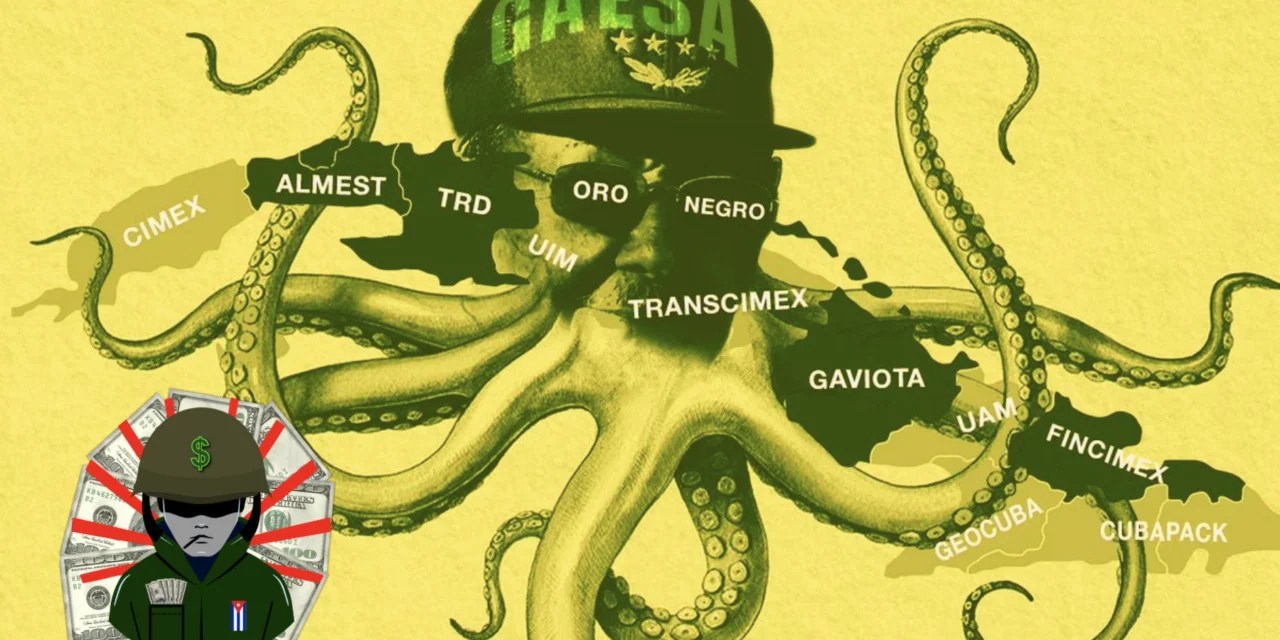
From that initial proposal, about 40 companies were evaluated before February 7, and 25 were ultimately certified. They were later joined by another 11 state and “private” MSMEs related to the information and communications technology sector and to the Ministries of Education and Higher Education, as well as one company located in the Mariel Special Development Zone, named Servitec Mariel, which is owned by GAESA, the Cuban military conglomerate.
After February 7, the official process of calling for and evaluating applications—by local governments in coordination with the MEP—began for 390 private MSMEs, of which only 113 had submitted complete documentation to be reviewed, evaluated, and approved (or not) to sign contracts with state intermediaries. Of these, 42 have so far been authorized, most of them linked to passenger transportation, logistics, and agricultural production, although there are several exceptions, especially among state-run entities.
Until now, the Cuban State had absolute control over the importation and sale of oil and fuel. However, in practice, little appears likely to change with the incorporation of “private” entities. After reviewing the list of selected companies, CubaNet found that prominent among them are businesses belonging to GAESA or to ministries, and even others managed by figureheads, including members of the Castro family.
In other words, GAESA has not relinquished its monopoly. Far from withdrawing, the conglomerate is simply adapting to new times, reorganizing its control, and in some cases preparing satellite companies that it has attempted to present as private but which are in reality not separate from the Revolutionary Armed Forces (FAR) or Castroist structures. Meanwhile, in other cases, it has allowed officially state-owned companies to import.
For example, among those already approved by the MEP and MFP, and with contracts signed with a state intermediary, are Cinesoft Recreación and Cinesoft Digital. Both are part of Cinesoft, the Information Applications Company of Cuba’s Ministry of Education.
Also maintaining close state ties, although presented as “private,” are two businesses previously investigated by CubaNet: Agroindustrial Media Luna, based in Ciego de Ávila—despite remaining linked to the dismissal and conviction process of former Deputy Prime Minister Alejandro Gil Fernández—and Cambute S.R.L., based in Havana. The latter manages online sales and home delivery services and is openly linked to the Association of Combatants of the Revolution, and ultimately to the Armed Forces and the Ministry of the Interior (MININT). Less than a year ago, its founder, Pedro Creach, announced the company’s shutdown due to logistical issues; nevertheless, it now appears as approved.
However, none of the aforementioned companies is as close to Castroism as the Gaia Local Development Project, whose owner is Lisa Titolo Castro, daughter of Mariela Castro Espín and Paolo Titolo. This business appears with at least two contracts already signed for fuel imports, one with the Caribbean Import Agency and another with CUPET, as confirmed by this outlet through sources linked to the family.
An investigation published by CubaNet in 2025 exposed how Raúl Castro’s granddaughter is connected to a web of businesses benefiting from state privileges and international funds. In addition to Gaia, Lisa manages two agricultural farms, a meat-processing company, and two construction materials microenterprises. With the recent license granted to import fuel, the Cuban dictator’s descendant ensures that her businesses remain operational.
Among other state-run MSMEs already approved to import fuel are the Company for Sanitation and Comprehensive Rehabilitation Services (Servivip)—responsible for maintenance and cleaning in neighborhoods and residences linked to the ruling elite or diplomatic personnel—and El Remolque, MECA-V, and DI-AUTO (vehicle maintenance and repair), all under the Ministry of Transportation.
In this group, the license of Cubapack Internacional, owned by GAESA and operating an office in Miami to sell and ship goods to Cuba—as revealed by CubaNet in 2024—was also approved.
Other noteworthy cases include Comelec Soluciones Integrales, a construction company managed by the Office of the Historian of Havana, which in turn belongs to GAESA, and ATEC Electrónica, dedicated to the production and assembly of electronic transmission and reception devices, as well as household appliances whose components are entirely supplied by China.
On February 25, the United States announced that it would allow the shipment of oil to Cuba under a more flexible licensing policy, according to the Office of Foreign Assets Control (OFAC). The measure is designed to authorize specific license applications for the resale of Venezuelan-origin oil destined for Cuba, provided that those transactions support the Cuban people and the private sector.
Although the policy excludes individuals or entities linked to the armed forces, intelligence services, or other Cuban government institutions included on the State Department’s restricted list, the Cuban regime presents as private businesses that are managed by the ruling elite or their figureheads, as previously investigated by CubaNet.
Who Is Awaiting Authorization?
On the list of MSMEs currently under evaluation—while awaiting security certifications or contracts with CUPET for fuel storage—several private companies also stand out, allegedly linked to the Cuban regime. Among them is Provatgom (manufacturer of rubber products), a company spun off from the state-owned Poligom, whose founder, Nelson Acosta, also comes from a regime-run enterprise.
Linked to Alcona S.A. and managed by relatives of Commander Guillermo García Frías, Mecánica Las Guásimas (manufacturer of agricultural and forestry machinery) has applied to import hydrocarbons. Meanwhile, Dofleini Exportador, an MSME serving as a showcase for software programming and headed by a member of Parliament, is also awaiting a license.
The hypothesis that most of the privileged MSMEs are connected to the regime or its figureheads is further reinforced by the fact that DGDC is among those that may soon be authorized to import fuel. This MSME, dedicated to the classification, distribution, transportation, and delivery of goods from abroad, has as its founding director Carlos Díaz, who previously served as director of Encomil (Light Industry Marketing Company).
DGDC maintains partnerships with the Italian Agency for Cooperation and uses Palco’s logistical infrastructure, including its warehouses, to provide services to MSMEs. Carlos Díaz worked at Palco between 2010 and 2016.
Also noteworthy are Finca La Ceiba and Agroindustrial La Ceiba, both dedicated to food production and the preservation of fruits and vegetables, and operating on land granted in usufruct by the Armed Forces.
Recently, the mountain of requirements that companies interested in importing fuel must meet was disclosed by the MSME Sonicarpa SRL. In a post on Facebook, later reproduced by several independent media outlets, the private company based in Central Havana, which is dedicated to event organization, outlined the imposed conditions. These highlight the mandatory dependence of such imports on state intermediaries, as well as the requirement to hold foreign currency previously deposited in Cuban banks.
As explained in the post and confirmed by several sources at the MEP and MFP, applicants will need approvals from the Institute of Physical Planning and the Cuban Fire Department (that is, from the Armed Forces and the Ministry of the Interior) if buyers—who may not resell the fuel to third parties or use it for activities not authorized for MSMEs—have any type of storage facility and intend to forgo CUPET’s services. In addition, MSMEs must obtain a “No Tax Debt” certificate from the National Office of Tax Administration and secure tanks and storage sites, even if they rent those services from another company, by first purchasing a policy from the state-owned insurer ESICUBA.
According to a report by EFE, several participants in meetings with Cuban government officials indicated that the importation by “private” entities of fuel shipments aboard merchant vessels would proceed with the addition of a security protocol—a procedure similar to that required for any other product purchased abroad—managed through a state importing company, a mechanism known for its slowness.
This accumulation of requirements and obligations will likely drive up the cost of acquired fuel excessively and contribute to higher street prices, as well as create new spaces and new forms of corruption within the regime’s bureaucratic framework, which has reinvented itself to continue controlling fuel imports.
NOTE: Cubanet contacted the MSMEs mentioned through their publicly available communication channels, as well as their representatives, seeking comments and clarifications regarding the facts described. As of the time of publication, none of those contacted had responded or agreed to answer our questions.
NOTE: This report was updated following publication on the website of the Office of Foreign Assets Control (OFAC), part of the U.S. Department of the Treasury, announcing that the agency will allow, under a specific licensing policy, the sale of Venezuelan-origin oil for use in Cuba.
 Web: /author/equipoinvestigacion-cubanet/
 Facebook: https://www.facebook.com/cubanetnoticias
 X / Twitter: https://x.com/CubanetNoticias
 HAZ TU DONACIÓN AQUÍ