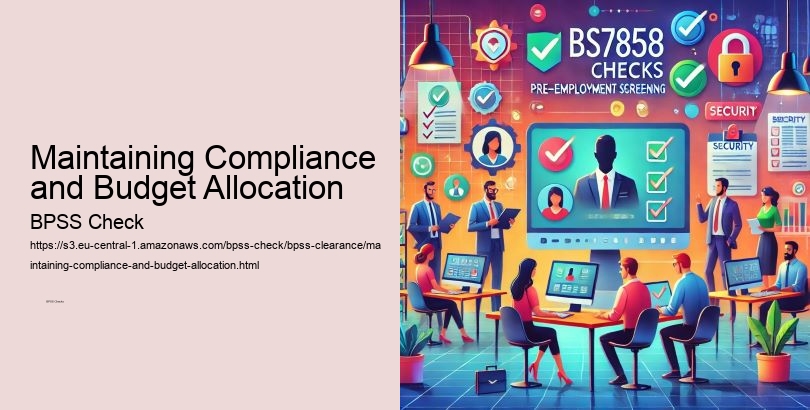
The organization can trust that the person in question does not hold a hidden criminal record that threatens security or integrity. It also applies to roles where there might be exposure to government finance systems, Public Services Network access, or involvement with organizations tasked with issues related to terrorism or espionage. It helps protect the workforce, the organization's reputation, and national interests.
When talking about the workforce, BPSS Clearance plays a significant role. Even areas like finance, under the scrutiny of the Financial Conduct Authority, can benefit from such checks. For fast accurate bpss clearance checks request a quote.
In addition to evaluating a candidate's criminal record, it may be prudent to consider their financial background. By aligning with the United Kingdom Accreditation Service guidelines, meeting standards defined in legislation, and following best practices from the Cabinet Office, organizations show a commitment to professionalism and thoroughness.
This helps protect assets, manage liabilities, and maintain confidence. This applies equally to those with aspirations of working in law enforcement, assisting with counter-terrorism, or managing operations that influence child welfare in education or health care settings.
Whether the candidate seeks to handle an asset like sensitive information for an education department, manage finance operations under the scrutiny of the Financial Conduct Authority, or work with assistive technology in a public sector role, ensuring that all verification and validation steps have been followed is essential. For sensitive roles, background checks may consider aspects of the candidate's personal conduct, possible links to espionage, or contact with extremist groups. Providing a birth certificate or a driver's license and ensuring that all data is handled in accordance with the Data Protection Act 1998 and the General Data Protection Regulation is standard practice.
As defined in legislation, organizations must manage data securely, apply encryption, and handle personal information responsibly. A referee can provide evidence of a candidate's past performance, adherence to standards, or their reliability.
A questionnaire may request employment history and gather evidence of past performance. By reviewing personal identity through digital identity tools, employing biometrics where appropriate, and ensuring encryption standards are followed, employers can handle data securely throughout the evaluation. public sector
Referees can be asked to provide evidence of past work quality, and evaluation procedures can consider factors like sick leave histories. The purpose of these measures is to maintain trust, ensure that no hidden risk exists, and confirm that all contracts can be managed with confidence.

Even those interacting with airport security, MI5 data, or working as a reservist in the British Armed Forces might need to comply. As a result, organizations that carry out BPSS Checks confirm their adherence to high standards, whether they operate in airport security, finance, law enforcement, health care, education, or manage sensitive information that must remain secure. It may also examine if a credit card or other financial documents are relevant, especially for positions that handle finance.
Throughout the process, the employer respects legislation and regulation. For instance, roles linked to MI5, counter-terrorism, or the police force demand a careful approach to Security vetting in the United Kingdom.
As defined in the Cabinet Office guidelines and supported by MI5 and other national security entities, BPSS Clearance sets a standard that helps protect against espionage, terrorism, identity fraud, and other threats. Since this process is comprehensive, it often involves a series of steps that might include a questionnaire to gather details, a background check to detect any crime records, confirmation of the expiration date on documents, checks on immigration status, and ensuring that the candidate meets right-to-work law standards.
A BPSS Check often involves an interview process, a questionnaire, and verification by a referee. Ensuring trust remains the main focus.

It reduces the likelihood of espionage, terrorism, or crime infiltrations. By confirming each candidate's personal identity, the employer reduces the risk of recruiting someone who may engage in crime, espionage, or other wrongdoing. The expiration date of each identity document is checked, ensuring that all materials provided are current and meet the standards defined by regulation.
Similarly, companies contracted to manage airport security or operate under the Public Services Network must meet the outlined expectations to prevent infiltration by individuals intending harm. Throughout this entire evaluation, data encryption standards are upheld, and information is managed with consideration for information privacy.
While focusing on security and reliability, the BPSS Clearance process also considers fairness, lawfulness, and transparency.

This alignment with regulation further establishes the expert stance of BPSS Check as an identity verification service that respects privacy, ensures data is correctly managed, and protects all parties involved. The correct application of a BPSS check ensures adherence to legislation such as the Data Protection Act 1998 and contributes to trust among the workforce. It ensures that positions of trust, whether in the civil service, British Armed Forces, or charitable organizations connected to the public sector, are filled by individuals who respect information privacy, demonstrate good character, and meet every regulation set to protect the nation's interests.
A questionnaire might detail previous roles, a candidate's reputation, and their commitment to lawful conduct. It reduces risk by confirming that those with employment responsibilities in the United Kingdom are suitably checked and qualified for roles that may involve contact with issues related to security, finance, law enforcement, airport security, or even a charitable organization operating alongside government agencies.
BPSS Clearance is about more than meeting a single regulation. Customers can provide feedback on their experience, and this feedback can lead to evaluation and change in how the verification steps are performed, ultimately improving efficiency.
Digital identity checks help confirm authenticity. In choosing BPSS Check, an organization can enhance its recruitment processes, protect sensitive areas, comply with legislation, and ensure that trust is not compromised.

Candidates might have to present a credit card statement, show that their visa or other immigration documents remain valid, or confirm that their identity document has no expiration date issues. Shorter sentences can help clarify the complexity. The presence of a Basic DBS check confirms that any unspent conviction is identified early.
Ensuring that the workforce is composed of individuals with lawful permission to be employed in the UK helps prevent crime, identity fraud, and infiltration by those who may wish to engage in espionage or other illegal activities. If the candidate passes these checks, the organization can proceed confidently, knowing that the risk of fraud or misconduct is lower.
Throughout this procedure, various pieces of evidence are inspected with care, including identity documents with an expiration date and other records needed to confirm authenticity and compliance. The implications of failing to conduct a BPSS Check effectively can impact multiple areas, from the organization's relationship with its customer base to potential liability issues.
The verification process supported by BPSS Check ensures that each candidate's background is reviewed with care. Security clearance through BPSS Clearance helps protect against fraud, espionage, terrorism, and other risks. regulation
It reduces the chance of identity fraud or infiltration by those with malicious intent. With a focus on personal identity verification, adherence to the Rehabilitation of Offenders Act 1974, and the careful evaluation of criminal record data, each decision becomes grounded in fairness and logic. A referee can validate employment records.
This background check examines any unspent conviction information according to the Rehabilitation of Offenders Act 1974. This background check and evaluation process ensures that personal data is handled responsibly, as defined in relevant regulation such as the General Data Protection Regulation and overseen by bodies like the Financial Conduct Authority where finance-related roles are involved.
Positions in the civil service or related to the British Armed Forces or other military sectors may require multiple layers of security clearance. When talking about the practicalities, BPSS Clearance involves checking immigration requirements, verifying that the candidate has the right to work, and ensuring no conflict with right-to-work law.
As the workforce in the United Kingdom changes over time, meeting the requirements of security clearance standards demonstrates diligence, integrity, and reliability. In some cases, BPSS Clearance supports positions that require consistent adherence to regulation and contact with sensitive areas of national interest.

The General Data Protection Regulation ensures that personal data collected during BPSS clearance is processed with respect, privacy, and proper security measures in place.
Yes, encryption protects sensitive information during the clearance process, ensuring data is safely managed and reducing unauthorized access.